Aircraft record
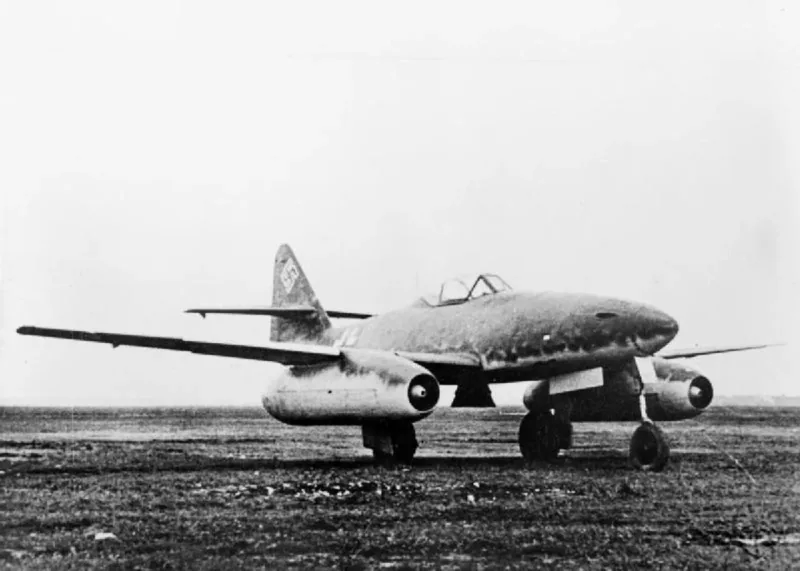
Messerschmitt Me 262
Me 262 · Messerschmitt · Germany
- Roles
- Fighter (Primary)
- Era
- World War II
Reference data
Quick facts
- Manufacturer
- Messerschmitt
- Country
- Germany
Reference data
Historical Content
Development and History
Aircraft family
The Messerschmitt Me 262 was the world's first operational jet fighter. Conceived before World War II, the aircraft took several years to enter service because the jet engines required for its design proved difficult to develop. [1]
Aircraft family
The Me 262 first flew on April 18, 1941, using a piston engine. Its first flight powered by jet engines took place on July 19, 1942, with test pilot Fritz Wendel at the controls. [1]
Aircraft family
The distinction between the first airframe flight and the first jet-powered flight must be retained. [1]
Design and Features
Variant: Me 262 A-1a fighter configuration
The Me 262 A-1a Schwalbe used two Junkers Jumo 004 B turbojet engines mounted beneath its swept wings. The fighter configuration carried four 30 mm cannons in the nose. [1]
Variant: Me 262 A-1a fighter configuration
Its speed gave it a considerable performance advantage over contemporary piston-engine fighters, although the early jet engines required careful handling. [1]
Operational History
Aircraft family
The Me 262 appeared in relatively small numbers during the final year of World War II. Although 1,443 aircraft were completed, the Smithsonian estimates that only about 300 saw combat. [1]
Aircraft family
Allied air superiority, attacks on German airfields and the difficulties associated with operating early jet aircraft limited its impact on the air war. [1]
Historical Significance
Aircraft family
The Me 262 demonstrated several design features that would become important in later jet aircraft, including swept wings, underslung engine nacelles and concentrated nose-mounted cannon armament. [1]
Aircraft family
Despite its technological significance, the aircraft did not change the outcome of World War II. [1]
Reference data
Specifications
Representative Variant Specifications
Me 262 A-1a
These specifications apply to the Me 262 A-1a variant and should not be read as values for every Me 262 version.
Dimensions
| Measurement | Value |
|---|---|
| Length | 12.1 mLength: 12.1 m |
| Wingspan | 12.5 mWingspan: 12.5 m |
| Height | 3.8 mHeight: 3.8 m |
Weight
| Measurement | Value |
|---|---|
| Empty weight | 4,419 kgWeight, empty: 4,419 kg |
Performance
| Measurement | Value |
|---|---|
| Maximum speed | 870 km/hTop speed: 870 km/h (540 mph); described in the record as approximately 869.4 km/happroximately |
Powerplant
turbojet · Me 262 A-1a Schwalbe
Junkers Jumo 004 B
Quantity: 2
Reference data
Variants
Recorded variants of this aircraft family. Variant entries here do not create separate public pages.
Reference data