Aircraft record
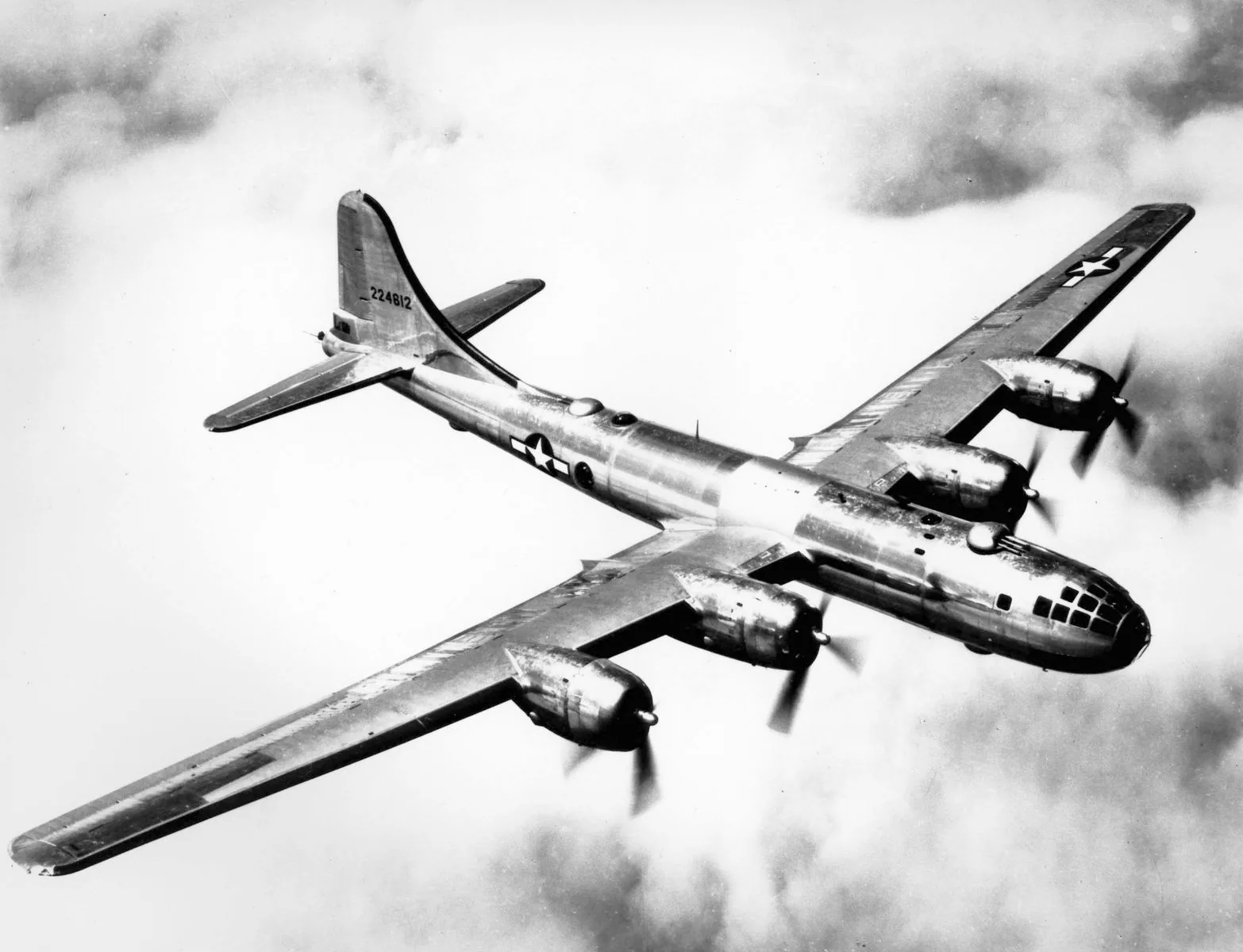
Boeing B-29 Superfortress
B-29 · Boeing · United States
- Roles
- Bomber (Primary)
- Era
- World War II
- Status
- Retired
Reference data
Overview
Boeing is the primary manufacturer record; Martin-built airframes are documented separately.
Reference data
Quick facts
- First flight
- 1942
- Manufacturer
- Boeing
- Country
- United States
- Status
- Retired
Reference data
Historical Content
Development and History
Aircraft family
The Boeing B-29 Superfortress was developed as a long-range American heavy bomber during World War II. Its development began before the United States entered the conflict, and the first XB-29 flew on September 21, 1942. [2]
Aircraft family
The aircraft was designed to conduct bombing operations over distances beyond the practical reach of many earlier bombers. Its long range made it particularly important to American operations in the Pacific. [2]
Design and Features
Operational History
Aircraft family
B-29 bombers initially conducted operations from bases in India and China before large-scale missions shifted to the Mariana Islands. From there, they carried out an extensive strategic bombing campaign against Japan. [1]
Aircraft family
The B-29 also returned to combat during the Korean War. Although jet fighters presented new threats, the Superfortress continued to perform bombing missions against a variety of targets. [1]
Historical Significance
Individual aircraft: Bockscar · National Museum of the United States Air Force aircraft
The B-29 preserved at the National Museum of the United States Air Force is Bockscar. On August 9, 1945, this aircraft dropped the atomic bomb on Nagasaki. [1]
Individual aircraft: Bockscar · National Museum of the United States Air Force aircraft
Bockscar was a specially modified Silverplate B-29, equipped differently from a standard bomber to carry the atomic weapon. [1]
Reference data
Specifications
Aircraft specifications
Family-level specifications
Dimensions
| Measurement | Value |
|---|---|
| Length | 30.18 m99 ft |
| Wingspan | 43.05 m141 ft 3 in |
| Height | 8.46 m27 ft 9 in |
Performance
| Measurement | Value |
|---|---|
| Maximum speed | 575 km/h357 mile per hour |
| Cruise speed | 354 km/h220 mile per hour |
| Range | 5,955 km3,700 mile |
| Ceiling | 10,241.3 m33,600 foot |
Powerplant
piston
Wright R-3350
Quantity: 4
Reference data
Sources
- Boeing B-29 SuperfortressNational Museum of the United States Air ForceFamily-level specifications · Design and Features · Aircraft family · Operational History · Aircraft family · Historical Significance · Individual aircraft: Bockscar · National Museum of the United States Air Force aircraft
- Development of the Boeing B-29National Museum of the United States Air ForceDevelopment and History · Aircraft family · Design and Features · Aircraft family